Cyprus Dossier
CapitalPrivate Client Dossier

Cyprus

Cyprus Permanent Residence by Investment — Regulation 6(2) (fast-track)

An EU member state with an English-speaking, English-law business culture and one of Europe’s most favourable tax frameworks — permanent residency secured fast against a single qualifying property.

Limassol · Paphos · Ayia Napa · Protaras
Cyprus
Prepared by 8T20 Capital · 13 June 2026 · Strictly private & confidential
At a glance

The essentials.

Minimum investment
€300,000

Status
Open — property route active
What it grants
Residence permit
Mobility
Schengen accession pending (visa-free short stays)
Physical presence
Visit once every two years to maintain status — no minimum stay.
Indicative timeline
Fast-track approval typically ~2–3 months once the file is complete; ~4–7 months end to end to card in hand.
Family
Spouse and dependent unmarried children under 25 (students included). Parents and parents-in-law are not eligible under Reg. 6(2).
Tax position
No inheritance, estate or wealth tax; 17-year non-dom regime on dividends, interest and rents; tax residency via the 60-day rule.
Location & country

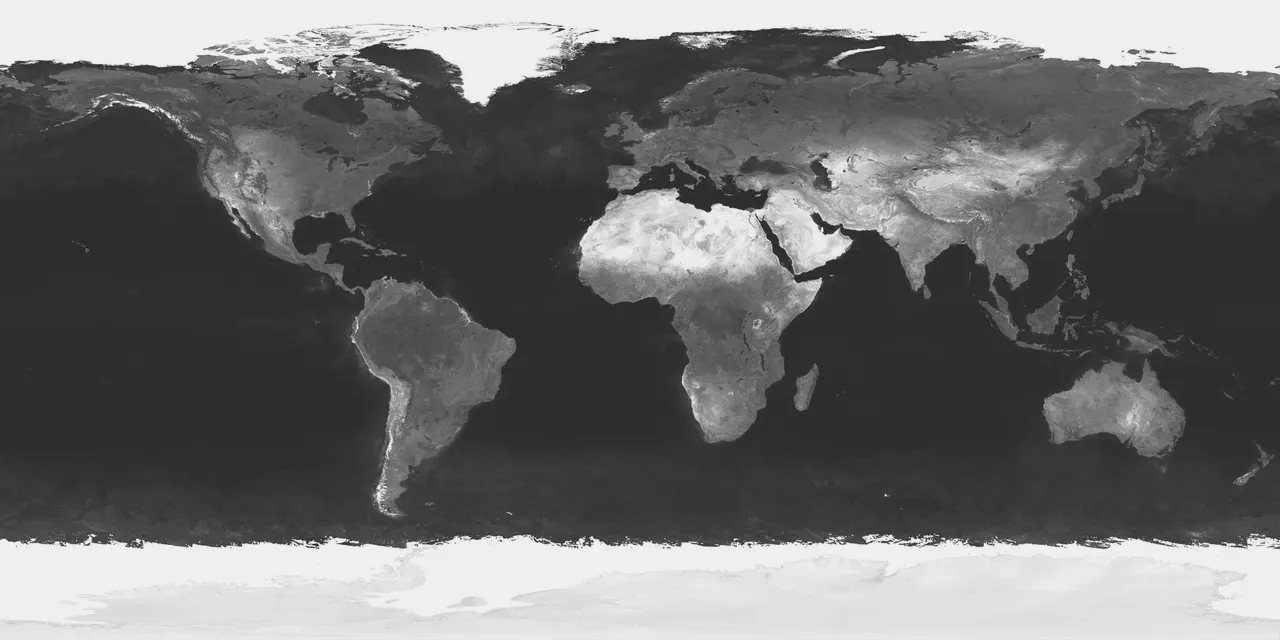
Where on the planet.

35.0°N, 33.2°E

Eastern Mediterranean · EU member

An English-speaking, English-law EU island at the meeting point of Europe, the Middle East and Africa — sun, sea and one of the continent’s most favourable tax frameworks. A short flight from the Gulf and the Levant, with a deep advisory tradition on the ground.

Capital
Nicosia
Currency
Euro (€)
Languages
Greek & Turkish; English widely spoken
Time zone
EET (UTC+2)
Climate
Hot-summer Mediterranean
Population
≈ 1.3 million
Area
9,251 km²
Dialling · drives on
+357 · Left
Overview

Why Cyprus.

A full member of the European Union where English is spoken everywhere and the tax framework is among the continent’s most favourable — held alongside beachfront, marina and resort homes from Limassol and Paphos to Ayia Napa and Protaras.

What our clients come for

The case for Cyprus.

EU residency, five routes

Permanent or temporary residency through one of five routes — an established, EU-member foothold secured for you and your family.

A tax-friendly base

Cyprus tax residency through the 60-day rule, no inheritance tax, and one of Europe’s most favourable frameworks for relocating individuals and their capital.

Holiday homes

Beachfront and resort residences in the island’s most sought-after addresses — used privately, let when you are away.

Land for your own development

Build plots and development land for clients who would rather create than buy — sourced, vetted and held end to end.

Capital growth

A market underpinned by EU membership, tourism and steady foreign demand — held for appreciation over the long horizon.

Rental income

Strong seasonal and long-let yields, with tenancy, maintenance and management handled discreetly on your behalf.

Residency pathways

The routes we open.

01

Permanent Residency — Regulation 6.2

Fast-track

Fast-track permanent residency through a qualifying €300,000 (+ VAT) investment in new-build residential property bought directly from the developer (resale does not qualify), with the price paid in full from funds remitted from abroad before filing. For the investor and their family. Indicative processing ~2–3 months once the file is complete.

02

Permanent Residency — Category F

Permanent residency secured on the basis of a stable annual income generated from abroad.

03

Permanent Residency — Category C

Permanent residency through substantial business or self-employment investment within Cyprus.

04

Yellow Slip — EU Registration

Registration certificate for EU citizens and their families exercising free-movement rights.

05

Pink Slip — Temporary Residence

Renewable temporary residence for non-EU nationals with sufficient means and accommodation.

Tax position

How your capital is treated.

Cyprus levies no inheritance tax and offers tax residency via the 60-day rule for qualifying individuals. Final positions are confirmed with licensed tax counsel.

No inheritance, estate or wealth tax; 17-year non-dom regime on dividends, interest and rents; tax residency via the 60-day rule. PR is a practical enabler of Cyprus non-dom status.

Indicative cost

What it costs, end to end.

Modelled on a €300,000 qualifying property for two adults. Indicative only.

Advisory & coordination fee · paid to our Cyprus office — includes three months of project management€10,000
Property investment (ex-VAT)€300,000
VAT (19% standard)€57,000
Transfer fees · none on new property under VAT€0
Legal fees (~1%)€3,000
Legal VAT (19%)€570
Government application (flat)€500
Aliens registration · 2 × €70€140
Total upfront€371,210
Health insurance · 2 × ~€300€600/yr
Process

From reservation to permit.

  • 01Reservation & due diligence · 1–2 wks
  • 02Sale agreement & deposit · 2–4 wks
  • 03PR application filed (Reg. 6.2) · 4–6 wks
  • 04Approval & permits issued · ~8–12 wks
Document checklist

The paperwork — directed and kept on track.

You don’t chase any of this. Share what you already have, or simply connect us with your PA, lawyer or family office — we tell everyone exactly what’s required and in what order, instruct the licensed professionals who issue, legalise and translate each document, and track the whole file so nothing lapses. The list below is for transparency, not homework.

Identity
  • Passport copies (all pages)
  • Passport-style photographs
  • National ID (if applicable)
  • Proof of address (utility bill / bank statement)
  • CV / professional background
Civil status
  • Birth certificates
  • Marriage certificate (if married)
  • Divorce certificate (if applicable)
  • Adoption papers (if applicable)
  • Dependent documents (proof of dependency) (if including dependants)
  • Name-change documents (if applicable)
Compliance & due diligence
  • Police clearance / clean criminal record
  • Bank statements (recent)
  • Bank reference letter
  • Source-of-funds summary
  • Source-of-wealth summary
  • Tax residency declaration
  • Sanctions / PEP declaration
  • Litigation / bankruptcy declaration (where applicable)
Financial
  • Proof of income
  • Proof of net worth
  • Employment letter (if employed)
  • Company ownership documents (if a business owner)
  • Audited financials (if applicable)
  • Dividend statements (if applicable)
  • Property sale agreement (if funds from a sale)
  • Inheritance documents (if inherited)
  • Gift deed (if gifted)
  • Loan agreement (if financed)
Health & insurance
  • Health insurance (where applicable)
  • Medical certificate (where applicable)
Property
  • Reservation agreement
  • Sale & purchase agreement
  • Title deed / land registry proof
  • Proof of payment
  • Bank transfer receipts
  • Valuation report (where required)
  • Developer documents (where required)
  • Tax / VAT payment proof
Cyprus-specific
  • Cyprus PR application forms
  • Proof of qualifying investment
  • Contract of sale
  • Proof of payment from abroad
  • Evidence funds originated outside Cyprus
  • Income evidence (€50,000+ from abroad)
  • Medical insurance
  • Clean criminal record certificate
  • Cyprus address / property documents
  • Dependant declarations
Development client
  • Company documents
  • Certificate of incorporation
  • Shareholder register
  • Board resolution
  • Business plan
  • Site / location plan
  • Master plan
  • Land survey / surveyor documents
  • Valuation report
  • Title deed or pre-sale agreement
Your documents — and how each is obtained

We direct the chain — end to end.

For every document below we tell you exactly who issues it and in what order, then instruct and sequence the licensed professionals and authorities who issue, legalise (apostille or consular) and translate it into Greek or English — kept on track so nothing lapses before filing. Your only hands-on steps are providing what you already hold and attending one in-person biometrics appointment, which we arrange and prepare you for. Per-country issuer detail is confirmed with you at intake.

Passport (every applicant and dependant)Light touch

Provide a certified colour copy of the bio + signature page per person. We flag any passport with under 12 months' validity for renewal up front, and make sure the authority is re-notified and the card re-matched if a number changes mid-process.

Who issues itThe passport authority of each person's country of citizenship.
Validity windowMust stay valid throughout the application and for the life of the permit; several programmes require 1+ year beyond the process (Cyprus prefers 2+).
LegalisationCertified copy only.
What it provesA valid passport for each person on the application — main applicant, spouse and every dependant.
Police / criminal-record certificateWe direct

We build a per-person jurisdiction matrix from your 10-year residence history, tell you and your advisers exactly which certificate each authority must issue, and direct the licensed professionals running apostille + certified translation in parallel — sequenced and back-timed so each is still fresh at filing and biometrics. Slow issuers (e.g. FBI/ACRO/SAPS, India, Gulf states, Nigeria, China) are identified and chased from day one.

Who issues itThe police / national-records authority of the country of citizenship AND every country of meaningful residence (we capture this using the strictest rule: any country lived in for >6 months in the last 10 years).
Validity windowAccepted only while fresh: 3 months (Portugal, Greece) to 6 months (Cyprus, Latvia, Malta, Mauritius) — and must still be valid at the biometrics/decision appointment.
LegalisationApostille (Hague-Convention countries) or multi-step consular legalisation (non-Hague), done BEFORE translation.
What it provesA certificate of no criminal record (good-conduct) for every applicant aged 14+ and any benefactor.
Source-of-funds / wealth-origin packWe direct

We direct the assembly of one master wealth-origin narrative + money-trail pack BEFORE any money moves: 6–12 months' bank statements of the funding account, tax returns, and documentary origin for each tranche (business-sale agreement, dividend/salary records, inheritance grant, gift deed, prior-investment returns). We brief the local bank and its KYC team ahead of time and map the exact remittance path the programme requires.

Who issues itAssembled from the client's own banks, employers, companies and advisers; the executing/local bank runs its own due diligence.
Validity windowHeadline 3-month account statement refreshed to the submission date; the underlying trail reaches back to origin of wealth.
LegalisationCertified copies; bank confirmations as required.
What it provesDocumentary proof that the investment (and often the income) is lawfully sourced and traceably remitted from the applicant's own account — the modern #1 rejection/referral risk.
Civil-status & family documentsWe coordinate

We tell you exactly which documents need a fresh certified extract (any older than ~6 months), plus the enrolment + financial-dependency evidence required for any adult child, then instruct and sequence the licensed professionals through the apostille and certified-translation steps. Sworn affidavits (where required) are executed in person near submission.

Who issues itThe civil-registry of the issuing country; old certificates often need a fresh certified extract before they can be apostilled.
Validity windowGenerally current within ~6 months at filing (Portugal/AIMA bounces older civil documents).
LegalisationApostille or consular legalisation, then certified translation into the programme's language.
What it provesMarriage, birth, divorce and dependency documents proving each relationship and each dependant's eligibility.
Private health insuranceWe coordinate

We specify the exact policy each beneficiary needs to meet the highest applicable bar (named coverages, territory wording, full permit-period validity, each person itemised), start-dated to submission, and line up a destination-recognised insurer to issue it. For Mauritius we coordinate the in-country medical instead.

Who issues itA destination-recognised insurer (a home/travel policy is rejected). Mauritius uses in-country medical tests instead of an insurance certificate.
Validity windowMinimum cover varies: Cyprus ~€20k, Greece/Portugal/Malta ~€30k, Latvia €42,600 liability limit; must run the full permit period and be valid at biometrics.
LegalisationInsurer certificate (no apostille).
What it provesA residency-grade private health policy, valid in the destination, covering each beneficiary for the permit period.
Secured income & capital evidenceWe direct

We compute the exact per-family threshold (e.g. Cyprus €50k + €15k spouse + €10k/child) and direct the assembly of recurring-income proofs — distinguishing recurring income from one-off capital, which does not count.

Who issues itAssembled from tax returns, employment/pension/dividend/rental contracts, audited financials and bank/brokerage statements.
Validity windowLast 1–2 years; statements refreshed to submission.
LegalisationCertified copies; translations where required.
What it provesProof of the required secured annual income (from abroad, on the real-estate routes) and liquid capital, scaled to family size.
In-person biometrics / presenceWe coordinate

We set the expectation at intake, pre-clear any entry visa needed just to attend, and plan one coordinated family trip after file acceptance (Latvia needs two appearances; Mauritius stacks the medical with biometrics).

Who issues itThe migration authority, in the destination country.
Validity windowUsually after approval/file-acceptance — sequenced so other documents don't expire during the wait.
What it provesThe one step that can't be done remotely — fingerprints/photo (and, for Mauritius, in-country medical tests).
The legalisation chain. A single apostille from the issuing country's competent authority, then certified translation. For countries outside the Hague Convention: Multi-step consular legalisation via the destination's embassy in the issuing country (weeks–months) — we start it immediately. Non-Hague examples: UAE and Vietnam (note: China joined the Apostille Convention in November 2023, so Chinese public documents now take an apostille, not consular legalisation). Always apostille/legalise FIRST, then translate (so the apostille is captured). Some programmes (Malta) require a translation done abroad to itself be apostilled.
Who it suits

Built around your situation.

Israeli families

A short flight from home, EU residency, and a familiar Mediterranean climate and community.

Lebanese nationals & expatriates

A stable, English-speaking EU base for families and diaspora capital seeking security and mobility.

Russian & CIS citizens

An established European foothold with a deep, trusted advisory relationship on the ground.

Germans, British & northern Europeans

Year-round sun, EU continuity post-Brexit for UK buyers, and a refined second-home market.

Risk & assumptions

What to weigh.

  • Cyprus is not currently in Schengen, but is working toward Schengen accession — a Cypriot permit is valid for Cyprus and does not by itself grant Schengen short-stay travel; this changes only upon Cyprus joining Schengen.
  • The residential route requires a new-build first-sale unit bought directly from the developer; resale does not qualify. The €300,000 is exclusive of VAT and funds must be remitted from abroad.
  • PR is permanent but is not citizenship; naturalisation needs ~7–8 years of genuine residence.
Legal basis & official sources

Traceable to the law.

Questions

The essentials, answered.

How fast can I obtain residency?
The Regulation 6.2 fast-track route is typically issued in around two to three months once a qualifying property is secured and the file is complete. Other routes vary.
Who can be included?
Your spouse and your dependent children may be included. Children under 18 are included automatically; unmarried children aged 18–25 can be included if they are financially dependent on you and in full-time higher education, each subject to an additional €10,000/yr income. Parents and in-laws are not eligible under Regulation 6.2. Exact eligibility is confirmed by counsel.
Do I have to live in Cyprus?
Permanent residency under Regulation 6.2 requires only a visit once every two years to maintain the status.
Can you handle the property and the residency together?
Yes — property and residency are run as one engagement. We coordinate licensed legal, tax and immigration counsel so the purchase and the application advance together.
Begin privately

Speak with 8T20 Capital.

We map the route, the cost and the timeline around your family — privately, and without obligation. Your residence is coordinated as a single engagement, with the regulated work directed through licensed local counsel throughout.

service@8t20capital.com · 8t20capital.com/advisory · Private WhatsApp line on request
This dossier is for general guidance only and does not constitute immigration, legal, tax, financial or property advice. Programme rules, investment thresholds, eligibility requirements and government policies change frequently — all figures are indicative and verified to 2026, and final positions are confirmed in writing by licensed professionals in the relevant jurisdiction. No residence approval is guaranteed: all applications are subject to due diligence, source-of-funds review, government discretion and applicable laws. Tax-residency planning requires personalised advice from appropriately qualified tax professionals. Cyprus is not currently in Schengen, but is working toward Schengen accession; a Cypriot residence permit is valid for Cyprus and does not by itself confer Schengen short-stay travel; this changes only upon Cyprus joining Schengen. 8T20 Capital coordinates, project-manages and directs the engagement and facilitates applications through admitted local counsel; it is not a law, tax or immigration firm and does not itself perform regulated legal, tax or immigration work. Source basis: Cyprus Civil Registry & Migration Department (gov.cy), Regulation 6(2) under Aliens & Immigration Law Cap. 105; 2 May 2023 revision raised secured income to €50,000. Verified 2026-06.